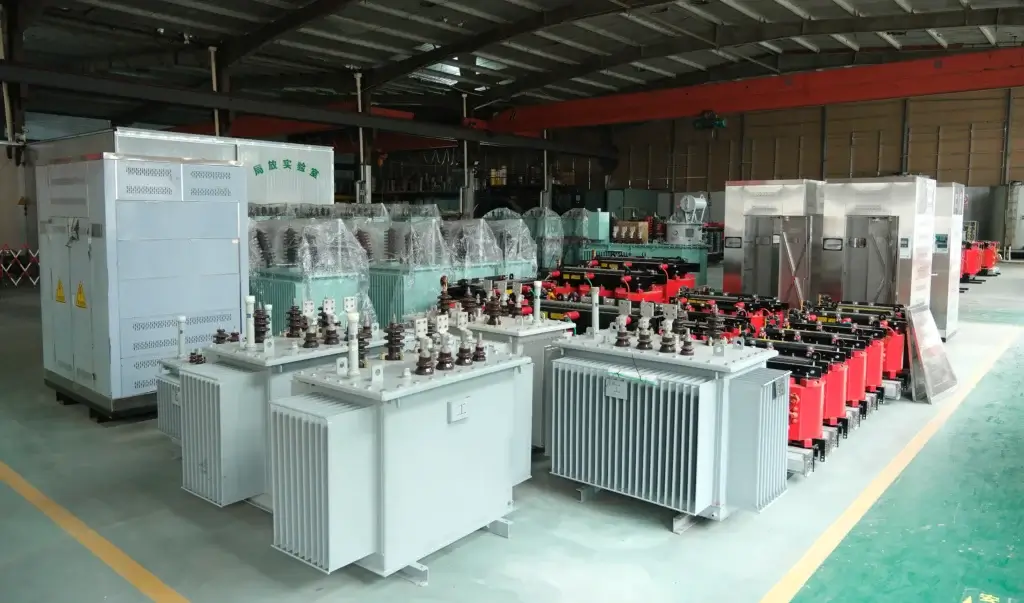
Oil mineral immersed transformers use mineral insulating oil to provide electrical insulation and transfer heat away from the transformer’s active parts. They remain a widely used solution for utility networks, industrial facilities, renewable-energy projects, commercial developments, and outdoor substations.
However, selecting a transformer involves more than comparing rated capacity and price. Buyers should evaluate the voltage ratio, winding material, impedance, losses, temperature rise, cooling arrangement, accessories, installation environment, and applicable technical standards.
Working with an experienced oil immersed transformer manufacturer can help ensure that these requirements are confirmed before production begins.
What Are Oil Mineral Immersed Transformers?
In oil mineral immersed transformers, the core and windings are contained inside a sealed tank filled with mineral insulating oil. The liquid performs two essential functions:
- It provides dielectric insulation between energized components.
- It transfers heat from the windings and core to the tank and cooling surfaces.
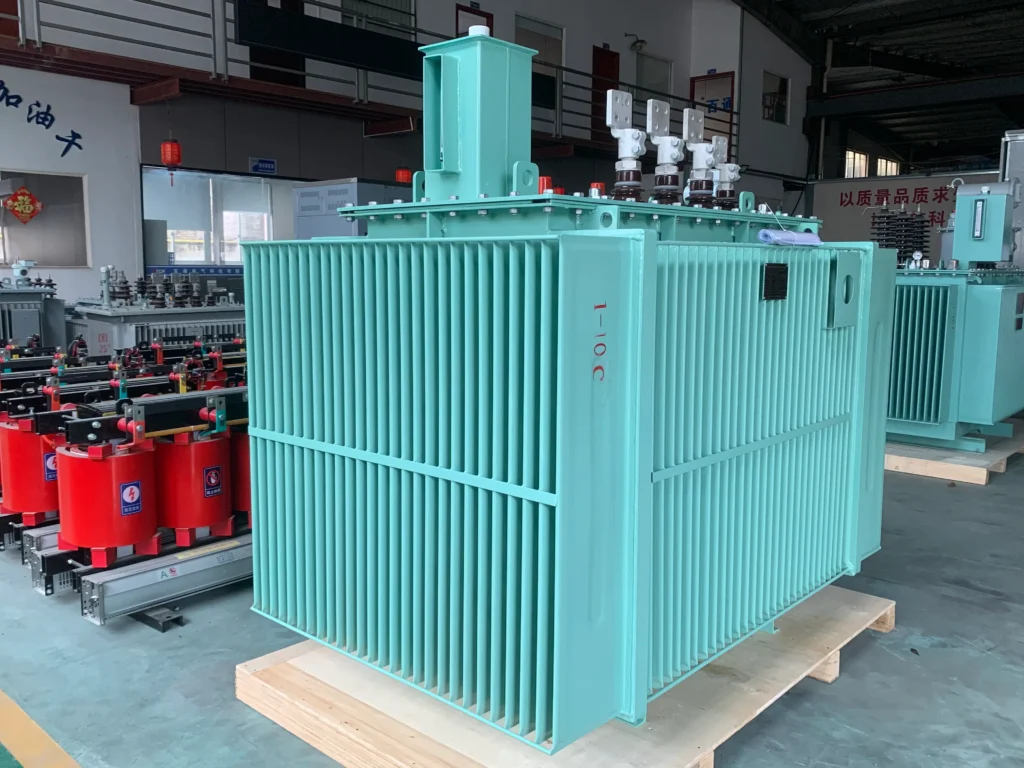
The transformer shown in the accompanying factory photograph has a large corrugated tank. These corrugated surfaces increase the effective cooling area and help dissipate heat into the surrounding air. The photograph also clearly shows the top-mounted bushings, terminal connections, lifting points, bolted cover, and supporting base.
Mineral insulating oil must be selected and controlled according to the transformer’s design and contractual requirements. IEC 60296:2020 provides specifications and test methods for unused and recycled mineral insulating oils intended for electrical equipment in which the oil is used for insulation and heat transfer.
The precise oil specification should be agreed upon between the buyer and manufacturer instead of being assumed from the transformer’s external appearance.
Why Choose a Mineral Oil-Immersed Transformer?
Mineral oil-immersed transformers are commonly selected for outdoor distribution and power applications because the liquid insulation and cooling system can support a broad range of ratings.
Their principal advantages include:
- Effective heat transfer from the windings and core
- Compact construction relative to many comparable ratings
- Suitability for continuous utility and industrial loads
- Availability of sealed-tank and conservator-type designs
- Straightforward oil sampling and condition monitoring
- Flexible configurations for different voltage systems
These transformers are frequently installed in substations, factories, mining facilities, commercial power systems, solar and wind projects, and distribution networks.
Mineral oil is combustible, so the installation design must consider fire separation, oil containment, ventilation, drainage, and local regulations. Where indoor installation, reduced fire risk, or minimal liquid maintenance is a priority, buyers may also review an oil type vs dry type transformer comparison before making the final decision.
Key Specifications Buyers Should Confirm
Every inquiry for oil mineral immersed transformers should include enough technical information for the manufacturer to select the appropriate electrical and mechanical design.
Rated Capacity and Voltage
Specify the required power rating in kVA or MVA, primary voltage, secondary voltage, frequency, number of phases, and tapping range. The manufacturer also needs to know whether the transformer will operate continuously near full load or experience frequent load fluctuations.
Vector Group and Impedance
The vector group determines the winding connection and phase displacement. Percentage impedance affects voltage regulation and prospective short-circuit current. These values must match the wider electrical system rather than being selected independently.
Losses and Temperature Rise
Ask the supplier to state guaranteed no-load loss, load loss, total loss, and temperature-rise limits. Comparing only the purchase price can hide significant differences in lifetime energy costs.
Cooling and Tank Construction
Many distribution transformers use natural oil and natural air cooling. Larger or project-specific units may require additional cooling arrangements. Buyers should confirm the cooling designation, tank type, corrosion protection, oil preservation method, and whether the tank design is suitable for the intended environment.
Accessories
Depending on the design and project requirements, accessories may include:
- Oil-level indicators
- Pressure-relief devices
- Temperature indicators
- Drain and oil-sampling valves
- Off-circuit or on-load tap changers
- Cable boxes or terminal enclosures
- Monitoring and alarm contacts
- Marshalling boxes and protection devices
Not every transformer requires every accessory. A detailed accessory schedule prevents omissions and unnecessary cost.
Manufacturing, Testing, and Oil Maintenance
Quality control should cover the core, windings, insulation system, tank, bushings, oil, and final assembly. The tank should be inspected for sealing integrity, while the active part must be properly dried before oil filling. Filling and oil-treatment methods should follow the specific transformer design and production procedure.
The functional properties required from insulating liquids include dielectric performance, cooling capability, ageing stability, compatibility with solid insulation, and material compatibility. These considerations are summarized in IEC TR 60076-26:2020.
Before shipment, buyers should request the applicable routine test report and confirm which tests are included. Depending on the specification, documentation may cover winding resistance, voltage ratio, vector group, impedance, no-load loss, load loss, insulation tests, and oil test results.
During operation, maintenance personnel should inspect for leakage, abnormal temperature, unusual noise, bushing contamination, corrosion, and changes in oil level. Oil sampling and laboratory analysis may be used when required by the transformer rating, operating history, maintenance program, or observed condition.
How to Request an Accurate Quotation
For an accurate quotation for oil mineral immersed transformers, provide:
- Rated capacity and quantity
- Primary and secondary voltages
- Frequency and number of phases
- Vector group and impedance
- Tapping range and tap-changer type
- Maximum ambient temperature and installation altitude
- Indoor or outdoor installation
- Required loss and temperature-rise limits
- Applicable standard
- Accessories, enclosure, and terminal requirements
- Destination country and delivery terms
If some values are unavailable, provide a single-line diagram, previous transformer nameplate, tender specification, or expected load information. BTCN Electric can then review the operating requirements and discuss a suitable transformer configuration.
Frequently Asked Questions
What does mineral oil do inside a transformer?
Mineral oil electrically insulates the windings and other energized parts while transferring heat to the tank and cooling surfaces. Its condition affects both insulation performance and thermal management.
Are mineral oil-immersed transformers suitable for outdoor use?
Yes. They are commonly used outdoors, but the enclosure, paint system, bushings, accessories, sealing arrangement, and corrosion protection must match the local climate and installation conditions.
What information is needed before ordering?
At minimum, provide capacity, voltage ratio, frequency, phase, vector group, impedance, tapping range, installation conditions, applicable standard, and required accessories. More complete information produces a more accurate technical proposal and quotation.