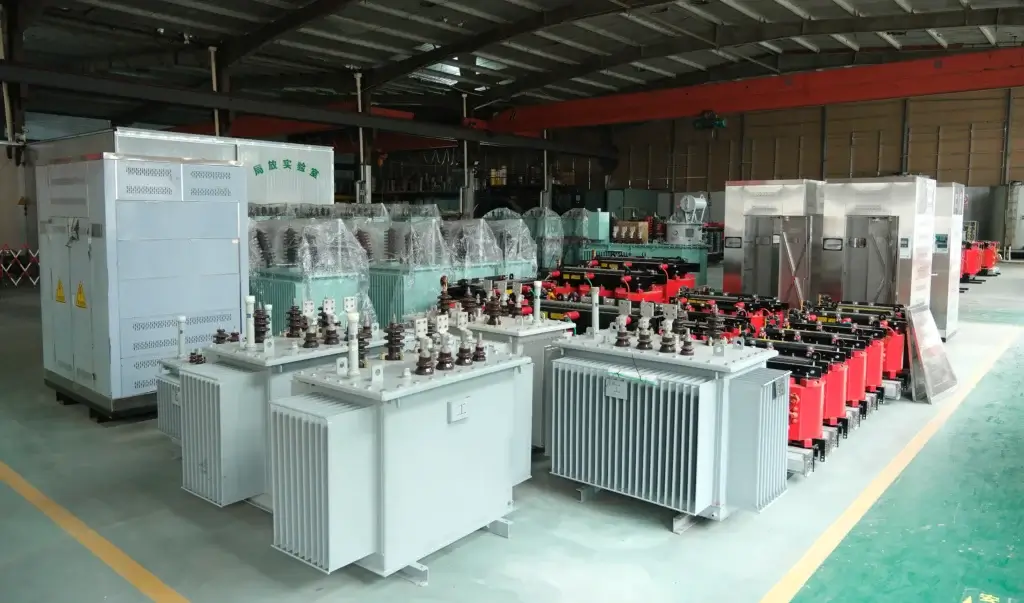
When an overseas buyer asks us to quote a dry type power transformer, we begin with project data, not a standard price list. Capacity, voltage ratio, frequency, vector group, impedance, tapping range, loss limits, and installation conditions all shape the finished unit.
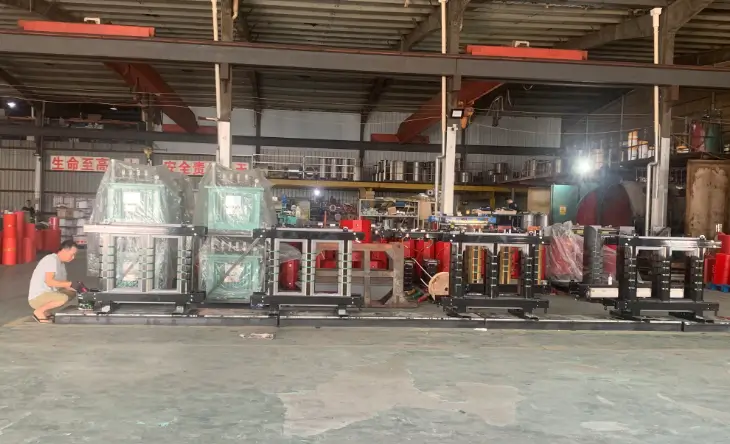
At our BTCN Electric factory in Yueqing, Wenzhou, our sales and technical teams review these details before releasing production. The workshop image shows several core-and-coil assemblies arranged on steel bases during production. A technician is working beside the units, while other equipment is protected for later handling.
Buyers can review our resin-insulated dry-type transformer range or send us their project specifications for a direct factory quotation.
Every Dry Type Power Transformer Starts with Approved Data
Two transformers with the same kVA rating can require different construction. The cable direction may change. The enclosure may need a different protection level. The site may also require specific temperature monitoring, fan control, dimensions, or loss values.
Before we prepare an offer, we normally ask the buyer to confirm:
- Rated capacity and voltage ratio
- Number of phases and system frequency
- Vector group, impedance, and tapping range
- Required conductor material, when specified
- No-load and load-loss requirements
- Ambient temperature, altitude, humidity, and ventilation
- Indoor or outdoor installation
- Enclosure and protection requirements
- Cable entry, busbar interface, and terminal direction
- Required accessories and test documents
After the main parameters are agreed, we prepare technical data and drawings for approval. These documents guide the winding arrangement, connection layout, base dimensions, and accessory scope.
Clear approval also reduces late changes after materials have entered production. It gives our workshop a defined reference during assembly.
How We Handle Core-and-Coil Assembly
The factory photo records an intermediate production stage, not a finished shipment. The cores, windings, support frames, and connection areas remain accessible. This allows our team to check the physical assembly before an enclosure or final accessories are fitted.
During this stage, we pay attention to:
- Core alignment and clamping structure
- Winding position and mechanical support
- Insulation clearances and lead routing
- Phase markings and terminal direction
- Earthing points and base alignment
- Lifting and installation positions
We compare the construction with the approved drawing as work progresses. This helps us identify dimensional or connection issues before later production stages.
Cooling fans, thermal sensors, enclosures, and special terminals are installed when they are included in the agreed scope. Their position and control method are confirmed in the technical documents.
Matching the Product to the Installation Site
A dry type power transformer does not use insulating oil as its insulation and cooling medium. This removes oil handling from the installation plan. However, room ventilation and environmental conditions still require careful review.
An open unit needs a suitable transformer room with controlled access. An enclosed unit must have enough ventilation for the specified load and cooling method.
Dust, moisture, altitude, ambient temperature, harmonic loads, and restricted airflow can affect the product configuration. We therefore ask for site information before confirming the enclosure and thermal arrangement.
Connection details also matter. The buyer should state whether the project uses cables, busbars, or bus duct. Entry direction and phase spacing must match the switchgear and site layout. We place these details on the approved drawing before production.
For projects using IEC requirements, buyers can review IEC 60076-11 for dry-type transformers when preparing technical specifications.
For regulated U.S. distribution applications, buyers should also check the applicable U.S. Department of Energy distribution transformer requirements before confirming loss values.
Factory Inspection, Documents, and Packing
After assembly, our checks follow the approved specification and agreed inspection plan. We confirm the nameplate information, dimensions, terminal layout, accessories, and visible workmanship.
The electrical test scope is stated in the quotation. Depending on the order, it can include:
- Winding resistance
- Voltage ratio
- Vector group
- No-load loss
- Load loss
- Impedance
- Insulation tests
- Accessory function checks
Before packing, we check the loose accessories, drawings, labels, and required reports. Exposed windings and terminals need protection from impact, dust, and moisture.
The transformer base must also be secured for transportation. We select the packing arrangement according to the route and storage conditions agreed with the buyer.
For an accurate quotation, send us the rated capacity, voltage ratio, frequency, vector group, impedance, tapping range, loss requirements, cooling method, enclosure level, installation conditions, and quantity.
We can then review the dry type power transformer as a real project instead of quoting an incomplete model.
FAQ About Dry Type Power Transformers
What information is needed for a quotation?
We need the capacity, voltage ratio, frequency, phase, vector group, impedance, tapping range, installation environment, enclosure, connection method, and quantity. Please also provide the applicable standard and required loss values.
Can BTCN customize the enclosure and terminal direction?
Yes. We confirm the enclosure, cable entry, busbar interface, terminal side, and overall dimensions before production. The final arrangement is shown on the drawing submitted for approval.
Does every dry type power transformer include cooling fans?
No. The cooling arrangement depends on the rating, thermal design, load profile, enclosure, and site ventilation. We confirm natural-air or fan-assisted cooling in the approved data sheet.