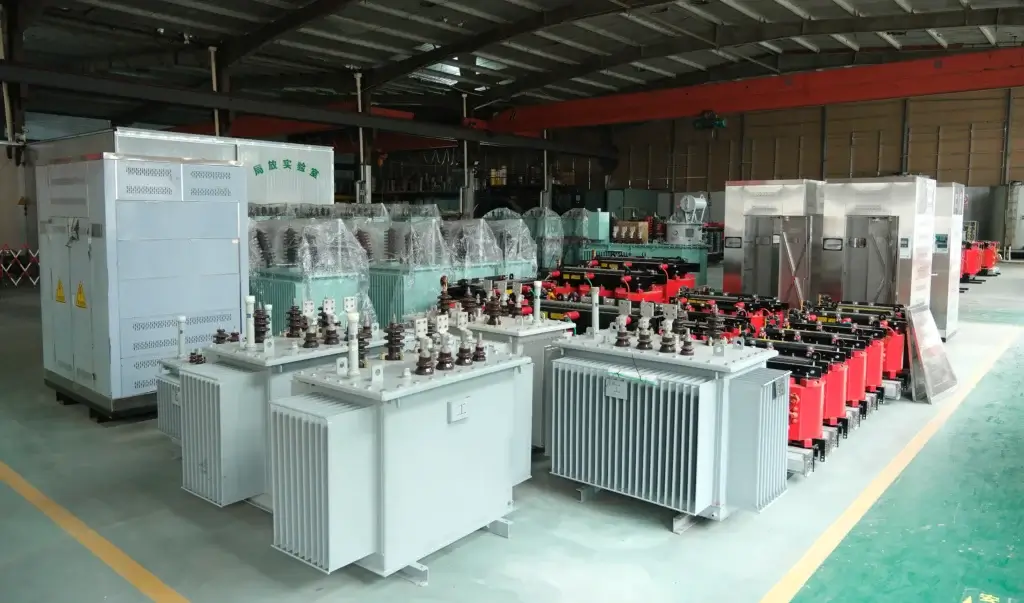
When a buyer sends us an inquiry for a 3 phase oil immersed power transformer, we first check the rated capacity, primary voltage, secondary voltage, frequency, and installation conditions. The capacity or product photograph alone cannot define the complete transformer.
Before quoting, we also confirm the vector group, impedance, tapping range, loss requirements, insulating liquid, cooling method, terminal direction, and required tests. Buyers can review our oil-immersed transformer product range before sending the project data.
Electrical Data We Confirm Before Quotation
For every 3 phase oil immersed power transformer, we prepare an electrical data sheet before releasing the order to production. This document becomes the basis for the design, approved drawing, production inspection, and final test report.
Capacity selection starts with the actual load rather than a general percentage margin. We ask for the maximum simultaneous load, motor starting conditions, operating hours, nonlinear loads, and expected future expansion.
For a three-phase transformer, the nominal line current is calculated as:
Current = kVA × 1,000 ÷ (√3 × line voltage)
This current affects the winding design, terminal size, internal leads, and the buyer’s outgoing cables. We also confirm:
- Rated primary and secondary voltage
- System frequency and phase sequence
- Vector group
- Impedance voltage
- Off-circuit or on-load tapping requirement
- Insulation level
- No-load and load-loss limits
- Ambient temperature and installation altitude
When an IEC-based specification is required, buyers can use IEC 60076-1 as a reference for general power-transformer ratings and terminology. The required standard and edition are recorded in our quotation instead of being assumed.
Tank, Cooling and Insulating Liquid
The tank of a 3 phase oil immersed power transformer must suit its loss level, liquid-preservation arrangement, transportation limits, and installation environment.
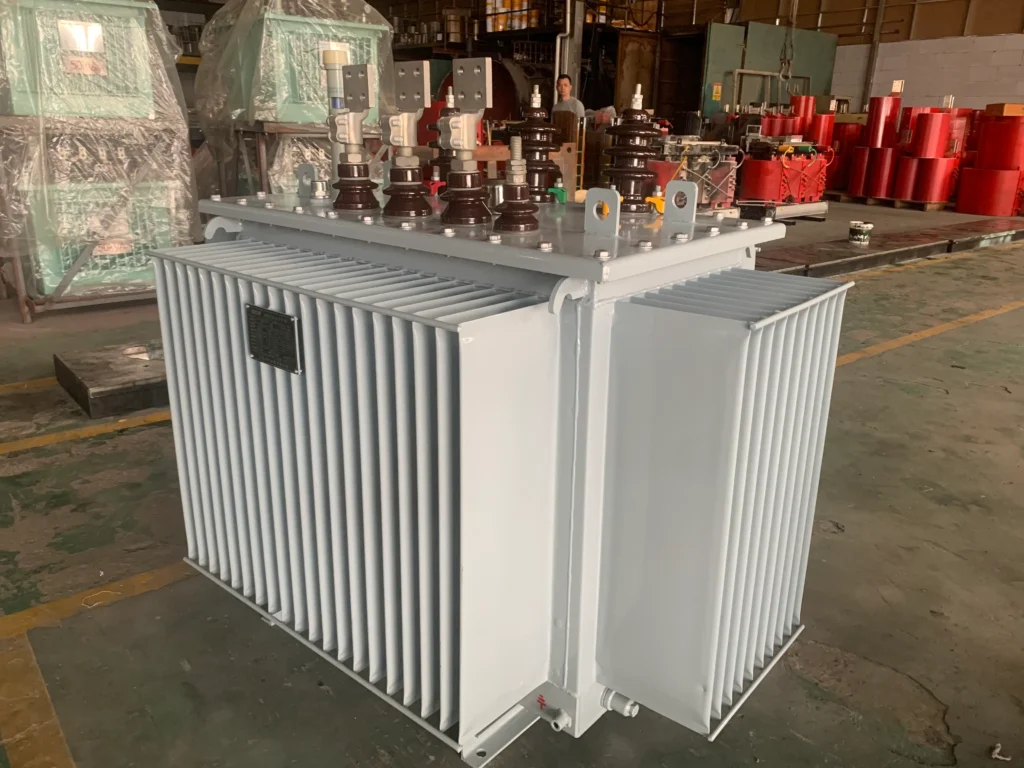
The workshop unit used in this article has a grey corrugated tank, a bolted top cover, porcelain bushings, three flat terminal palms, lifting points, and an external nameplate. A separate conservator is not installed on the visible assembly.
Corrugated tank panels increase the available cooling surface. In some sealed designs, they also accommodate changes in liquid volume. However, we state the actual preservation system and cooling designation in the approved data sheet. We do not determine them from the external appearance alone.
The insulating liquid is another contractual item. Mineral oil, natural ester, and other specified liquids have different handling and project requirements. For projects using mineral insulating oil, IEC 60296 provides specifications and test methods for oil used for insulation and heat transfer.
Before production, we therefore confirm:
- Required insulating-liquid type
- Cooling designation
- Sealed or conservator arrangement
- Required pressure-relief accessories
- Oil level and temperature indication
- Indoor or outdoor installation
- Corrosion-protection requirement
- Cable-box or exposed-terminal arrangement
How We Assemble, Test and Release the Transformer
Our work begins with the approved technical data and outline drawing. The drawing records the dimensions, foundation arrangement, lifting points, bushing positions, terminal direction, and specified accessories.
During production, we follow the approved winding, core, insulation, tank, and connection requirements. Before liquid filling, we check the tank, sealing surfaces, bushings, tap connections, fasteners, and grounding points. Cleanliness and moisture exposure are controlled during the filling process.
The routine test plan depends on the contract and governing standard. Typical checks can include:
- Winding resistance
- Voltage ratio and phase displacement
- Short-circuit impedance and load loss
- No-load loss and no-load current
- Dielectric tests
- Insulation resistance
- Tank sealing or leak inspection
- Functional checks of specified accessories
Additional or witnessed tests are agreed before the order enters production. We do not add an unquoted test after manufacturing has finished.
Before a 3 phase oil immersed power transformer leaves our factory, we compare the finished unit with the approved drawing and data sheet. We check the nameplate, terminal markings, accessories, coating, fasteners, and packing condition. Bushings and projecting components receive additional protection for transportation.
Information Required for an Accurate Quotation
To quote a 3 phase oil immersed power transformer, please send:
- Rated capacity in kVA
- Primary and secondary voltage
- Frequency
- Vector group
- Impedance and tapping range
- Load type
- Required loss values
- Insulating-liquid requirement
- Site temperature and altitude
- Terminal and cable-entry direction
- Required accessories and tests
- Quantity and destination
A single-line diagram, technical specification, or existing transformer nameplate is also helpful. If some information is missing, we can identify the open items before preparing the final offer.
Buyers can request a transformer quotation and attach the project documents for our review.
Frequently Asked Questions
How should I select the transformer capacity?
Use the maximum simultaneous load, not only the total connected load. Motor starting, harmonic loads, future expansion, ambient temperature, and operating duty should also be considered.
Does every oil-immersed transformer use mineral oil?
No. The insulating liquid depends on the project specification. Before production, we record the selected liquid and its technical requirements in the approved data sheet.
Does a corrugated tank always mean a hermetically sealed transformer?
Not automatically. Corrugated panels are used for cooling and can form part of a sealed design, but the complete liquid-preservation arrangement must be confirmed in the technical documents.