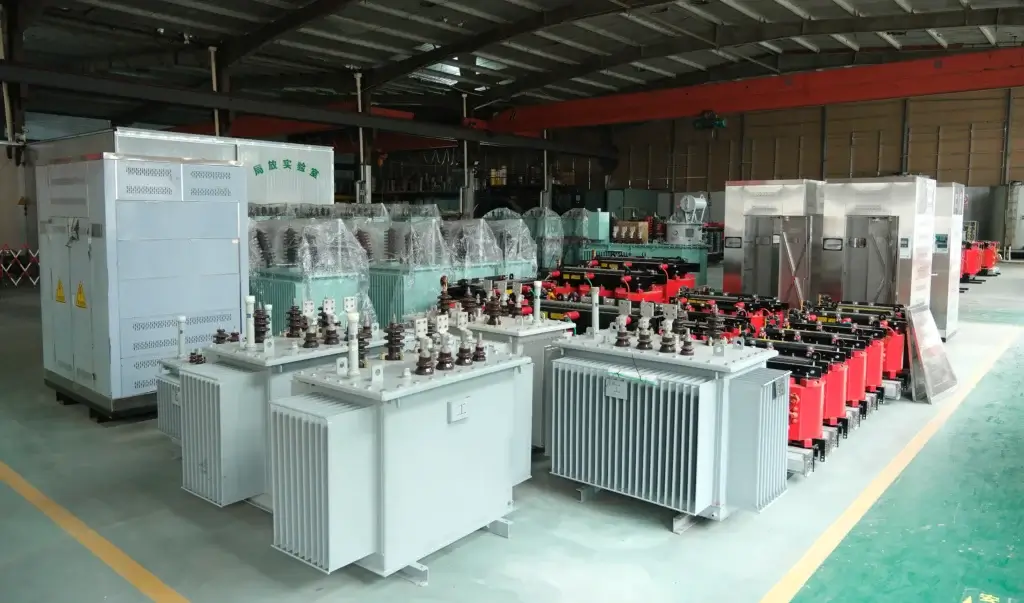
In the world of electrical distribution, the oil immersed transformer (also known as an oil-filled transformer) remains the most reliable and widely used solution for high-voltage applications.
In this article, we’ll explain its definition, how it works, and why it might be the best choice for your electrical system. If anything is unclear, please contact us and we’ll be happy to explain it in more detail.
1. Definition: What is an Oil Immersed Transformer?
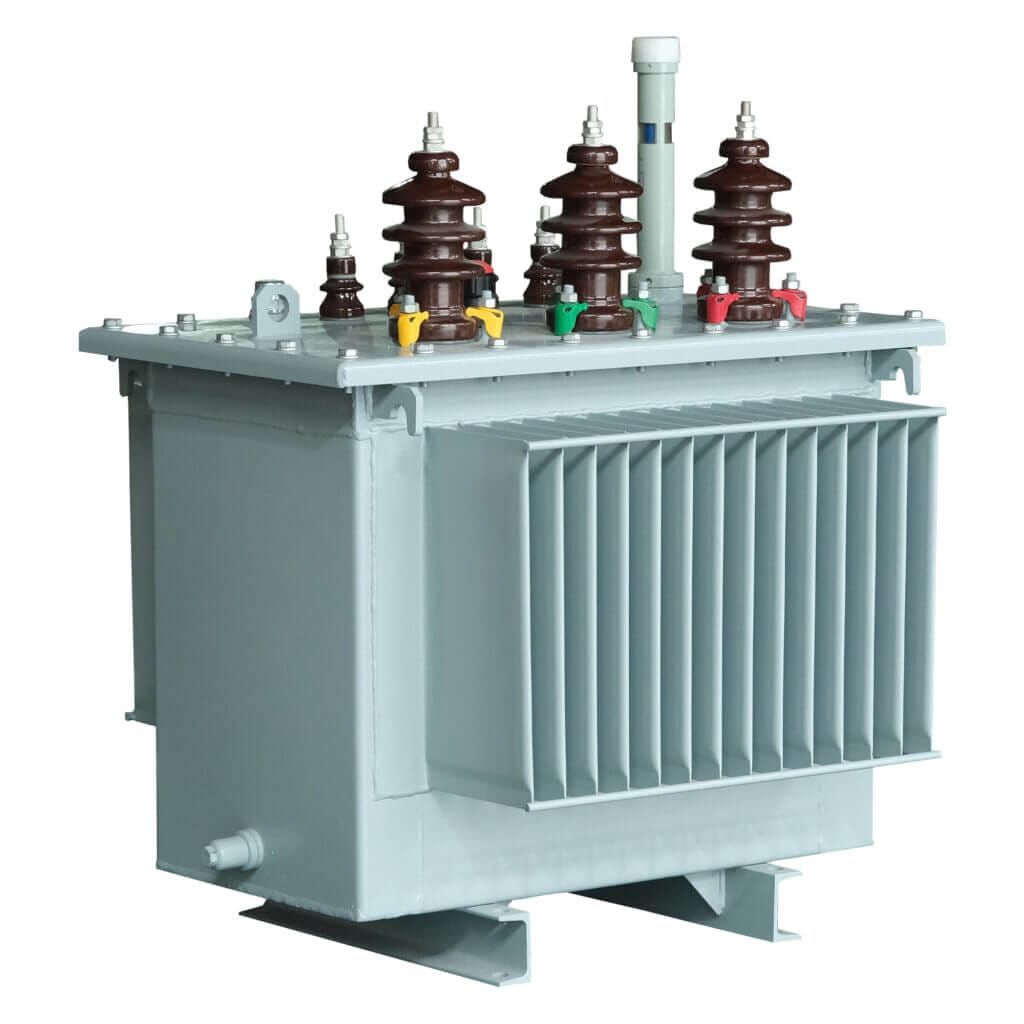
An oil immersed transformer is a type of voltage transformation device where the magnetic core and the windings are completely submerged in an insulating liquid, typically refined mineral oil.
Unlike dry-type transformers that use air for cooling, the oil in these units serves a dual purpose:
- Insulation: It provides high dielectric strength to prevent electrical arcing.
- Cooling: It acts as a heat transfer medium, carrying heat away from the core to the radiator fins.
2. How Does It Work?
The core of the transformer operates on the principle of electromagnetic induction. As electricity flows through the primary winding, it creates a magnetic field that induces a voltage in the secondary winding.
During this process, heat is generated. The surrounding transformer oil absorbs this heat and moves through the cooling tubes via natural convection or forced cooling (fans). This efficient cooling cycle allows oil-filled units to handle much higher voltages and capacities compared to air-cooled units.
3. Key Components You Should Know
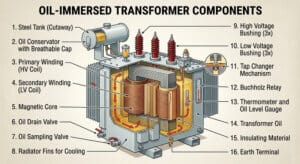
Components of an Oil-Filled Transformer:
- Transformer Tank: The heavy-duty steel enclosure that holds the oil and core.
- Oil Conservator: A small tank mounted above the main tank that allows for oil expansion and contraction during temperature changes.
- Bushing: Insulated terminals that allow the connection of high-voltage lines to the internal windings.
- Buchholz Relay: A critical safety device that detects gas accumulation or oil flow issues inside the tank.
4. Oil Immersed vs. Dry Type: Quick Comparison
| Feature | Oil Immersed Transformer | Dry Type Transformer |
| Cooling Medium | Mineral Oil | Air / Epoxy Resin |
| Installation | Mostly Outdoor | Indoor (Basements, High-rises) |
| Voltage Capacity | Very High (up to 500kV+) | Limited (usually up to 35kV) |
| Maintenance | Periodic Oil Testing Required | Minimal |
| Initial Cost | Lower | Higher |
5. Why Choose an Oil Filled Transformer?
High Efficiency and Durability
Oil-filled units generally have a longer lifespan (30+ years) and offer better heat dissipation, making them ideal for heavy industrial loads and grid distribution.
(In our 20 years of manufacturing at Baitong Electric, we’ve found that customers in Southeast Asia prefer oil-filled units specifically because of their superior heat dissipation in tropical climates.)
Cost-Effective for Large Projects
Superior Self-Healing Properties
Unlike solid insulation (like resin) which can crack under extreme stress, oil is a “self-healing” insulator. If a small spark occurs, the oil fills the gap immediately.
6. Applications
You will typically find oil filled transformers in:
- Power Grids: Step-down substations for cities.
- Renewable Energy: Wind farms and solar power plants.
- Heavy Industry: Steel mills, mining operations, and large factories.
Conclusion: Finding the Right Supplier
Choosing the right oil immersed transformer manufacturer is as important as the equipment itself. At Baitong Electric (BTCN), we specialize in high-efficiency distribution transformers designed to meet international standards like IEC 60076.
Looking for a quote or technical specifications?
[Contact our engineering team today] for a free consultation on your next project.