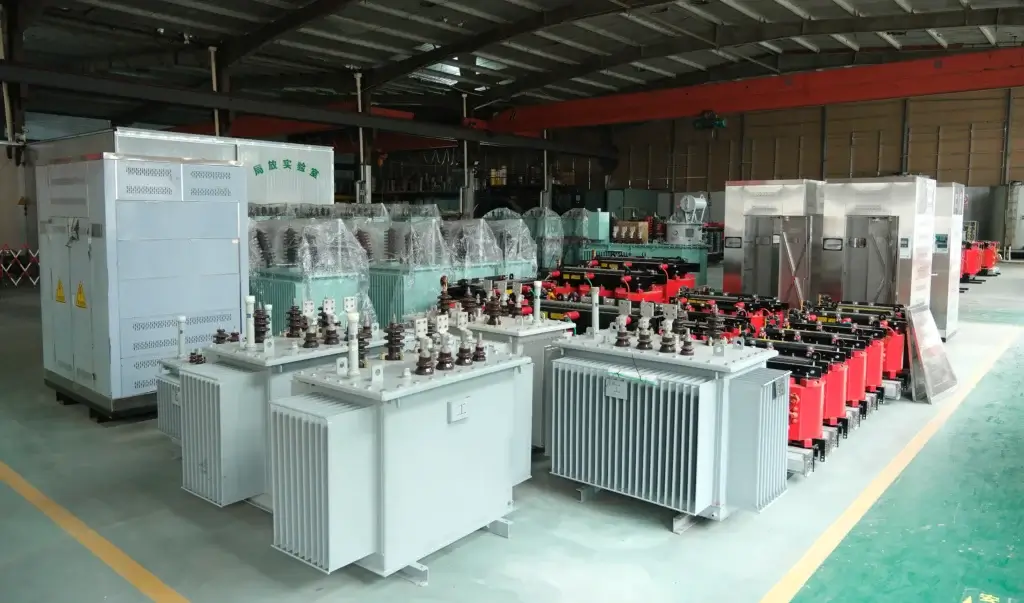
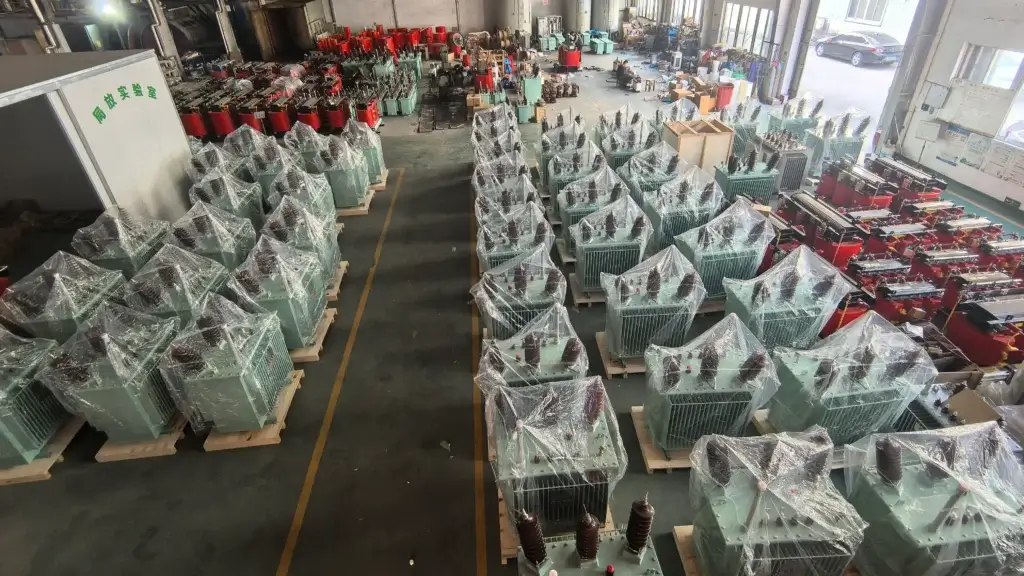
When customers visit our facility at Baitong Electric, one of the most common technical questions I get isn’t just about the price—it’s about the “why.” Why is the core submerged in oil? How does a static piece of equipment handle 35kV without exploding?
If you are a procurement manager or an electrical engineer, understanding the internal mechanics of an oil-immersed transformer is crucial for long-term maintenance and project planning. Let’s break down the science behind the steel.
1. The Core Principle: Electromagnetic Induction
At its heart, a transformer is a “voltage translator.” It uses Faraday’s Law of Induction. When an alternating current (AC) flows through the primary winding, it creates a fluctuating magnetic field.
We use high-grade silicon steel laminations for the iron core to guide this magnetic flux to the secondary winding. Because the windings aren’t physically connected, the energy is transferred entirely through this magnetic “bridge.” The ratio of the wire turns determines if the voltage goes up (Step-up) or down (Step-down).
2. Why the Oil? (It’s Not Just for Lubrication)
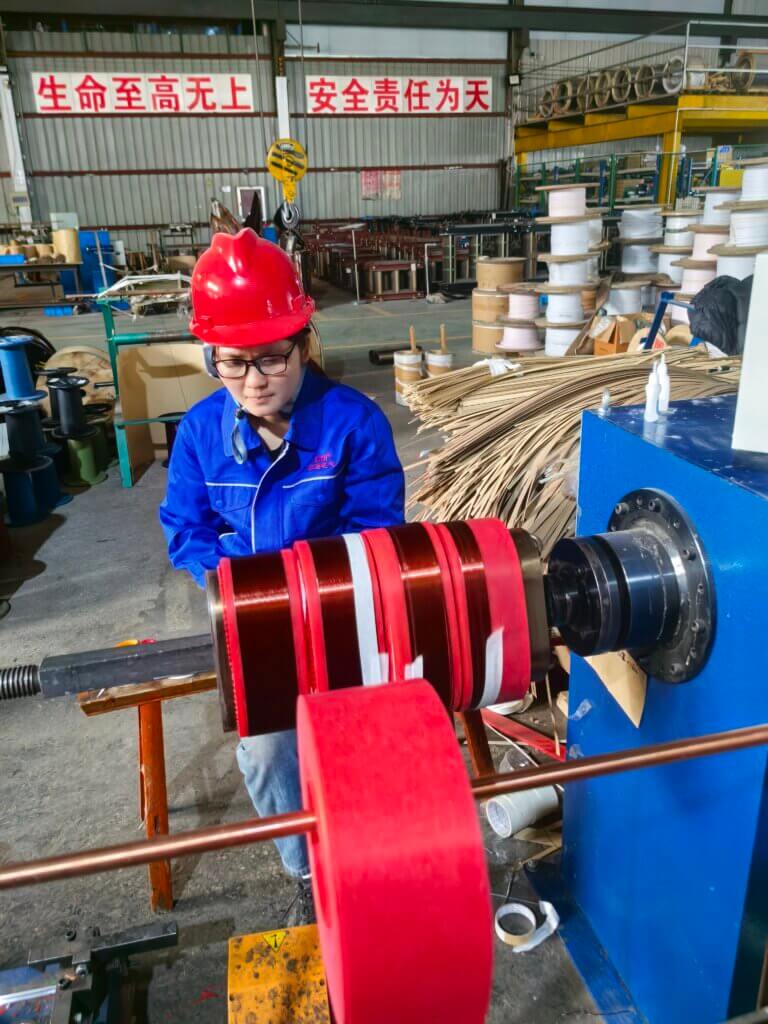
In our workshop, we spend a significant amount of time vacuum-filling the tanks with high-quality mineral oil. Unlike your car engine, this oil doesn’t lubricate moving parts—it serves two critical “invisible” roles:
- Superior Insulation: Even at high voltages like 11kV or 33kV, electrical arcs can jump through the air. Transformer oil has a much higher dielectric strength than air, acting as a powerful insulator that prevents short circuits within the tight confines of the tank.
- Thermal Management (The Cooling Cycle): Transformers get hot. As the coils generate heat, the oil warms up and rises (convection), moving toward the external radiator fins. As it cools down, it sinks back to the bottom. This natural ONAN (Oil Natural Air Natural) cooling cycle is what allows these units to run 24/7 for decades.
3. Essential Components You Should Know
When we build a transformer at btcnelectric, we focus on several “safety valves” that keep the physics in check:
- The Conservator Tank: As oil heats up, it expands. This small tank on top provides the “breathing room” needed so the main tank doesn’t rupture.
- The Buchholz Relay: For our 35kV units, this acts as the “brain.” It detects gas buildup inside the oil, giving you an early warning before a minor fault becomes a total failure.
- Silica Gel Breather: This filters out moisture. Remember: Water is the enemy of transformer oil. Even a few drops can ruin the insulation properties.
4. Why Choose Oil-Immersed Over Dry-Type?
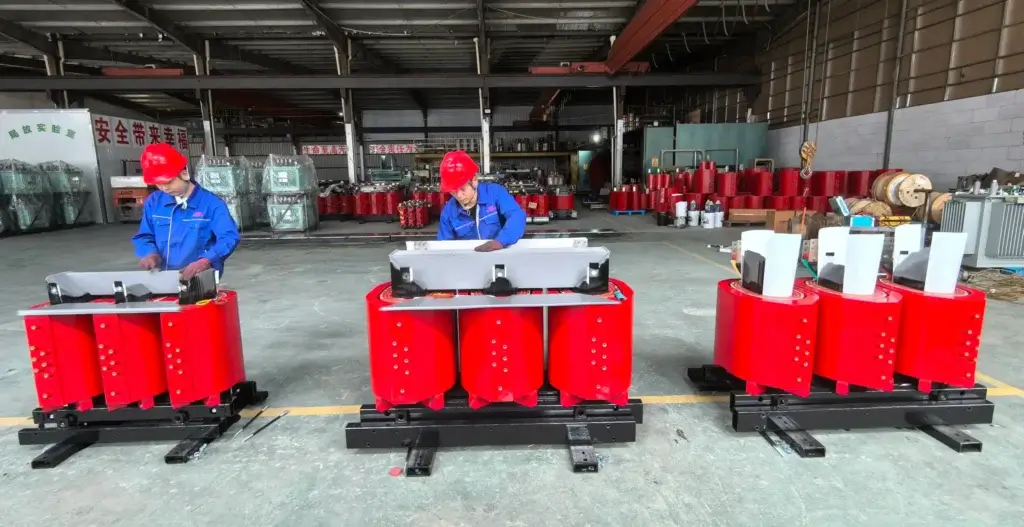
While dry-type units are great for indoor use, oil-filled transformers are the workhorses of the outdoor grid. They handle higher voltages better, have a longer lifespan, and—most importantly for many of our clients—they are more cost-effective for large-scale industrial power distribution.
5. Final Thoughts
Understanding how an oil-filled transformer works helps you appreciate the precision required in its manufacturing. From the quality of the copper windings to the purity of the insulating oil, every detail matters.
Looking for a customized voltage solution?
At Baitong Electric (btcnelectric), we specialize in tailoring transformers to specific international grid requirements.